






News

Period
article

09 July 2026

By: AgroEcoNum

CoEDiTAg Project Annual Meeting

How does the development of Digital Equipment and Technologies (EDiTs) contribute to the agroecological transition?
article

07 July 2026

By: AgroEcoNum

CoBreeding Project Annual Meeting

How can breeding programmes be developed to provide a greater number of more diverse and complementary genotypes, so as to cover a broad spectrum of environmental conditions and current and future production systems?
Epigenetique_Piyaset_SHUTTERSTOCK.webp
article

29 June 2026

By: AgroEcoNum

ADAAPT Project Annual Meeting

What if the imprints left by the environment on the genomes of plants and animals could help us better support the agroecological transition?
article

29 June 2026

By: AgroEcoNum

[VIDEO] Launch of the AI-Herbage project

How can we support grassland farms in the face of increasingly variable feed resources, climatic uncertainties and the need to preserve biodiversity? It was against this backdrop that the AI-Herbage project was launched; the project was selected in the latest PEPR call for proposals on 8 and 9 June 2026 at the Institut Agro Montpellier’s La Gaillarde campus.
Séquençage génome_istock.jpg
article

29 June 2026

By: AgroEcoNum

Annual meeting of the AgroDiv and BReIF projects

In the face of climate change and against the backdrop of an ongoing agroecological transition, the genetic diversity of plants and animals is a key driver for building a more sustainable and resilient agricultural sector. However, the breeds and varieties currently in use represent only a small fraction of the genetic diversity available in our national collections.
Ration vache_BERTRAND Nicolas_INRAE.jpg
article

29 June 2026

By: AgroEcoNum

Launch of the AI4DIET project

How can animal feed rations be optimised to support the agroecological transition of livestock farming systems? This is the central focus of the AI4DIET project, a winner of the latest PEPR call for proposals, whose launch event took place on 26 May at INRAE Centre-Siège in Paris.
article

02 June 2026

By: AgroEcoNum

Launch of the TreeD-Resist project

What if the orchards of tomorrow were designed not only to produce… but also to withstand challenges? Faced with climate change, health pressures and dependence on inputs, current orchard systems are reaching their limits. How can we design orchards that remain productive whilst being more resilient to environmental and biological stresses? This is the central challenge of the TreeD-Resist project, winner of the latest call for proposals under the PEPR Agroecology and Digital programme, which was launched on 18 and 19 May at the INRAE Pays de la Loire centre in Angers (and via videoconference for some of the teams in Avignon and Montpellier in particular), bringing together a consortium comprising INRAE, Inria and CIRAD around a shared ambition: to better understand, measure and predict the immunity and resilience of agroecological orchards.
article

26 June 2026

By: AgroEcoNum

Launch of the Past2Eco project

What if the crops of tomorrow were to be found in the biodiversity of yesterday? That is the central aim of the Past2ECO project, whose kick-off meeting was held on 12 and 13 May at the Centre’s Cézeaux Campus.
article

20 May 2026

By: AgroEcoNum

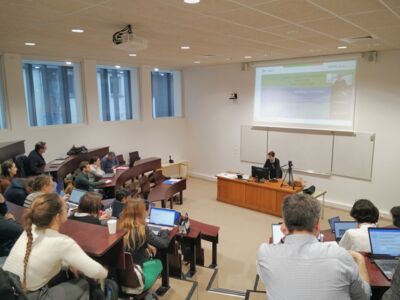
MISTIC Project Annual Meeting

The MISTIC project (Crop Microbiomes and Information and Communication Technologies) under the PEPR AgroEcoNum programme held its annual scientific meeting on 28 and 29 April at the Sophia Agrobiotech Institute and the Inria Centre at the Université Côte d’Azur.
BerlEyes_Couverture article_Crédits Terres Inovia.jpg
article

07 May 2026

By: AgroEcoNum

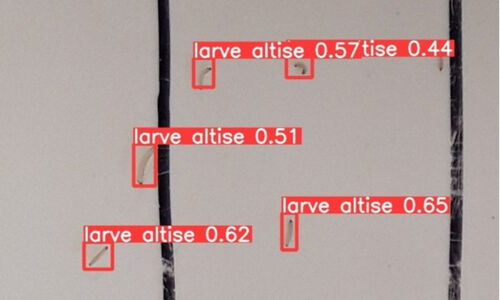
Berl’Eyes: a tool for quickly detecting and quantifying rapeseed flea beetle larvae using a smartphone

Terres Inovia, with support from the AgroEcoPhen project under the PEPR Agroecology and Digital Initiative, will launch the Berl’Eyes tool in May 2026, which automatically counts rapeseed flea beetle larvae using a single photo. Using artificial intelligence, this tool simplifies a counting method that was previously time-consuming and tedious, and addresses a major challenge for the oilseed and protein crop sector.
article

07 May 2026

By: AgroEcoNum

5 interviews to watch on video

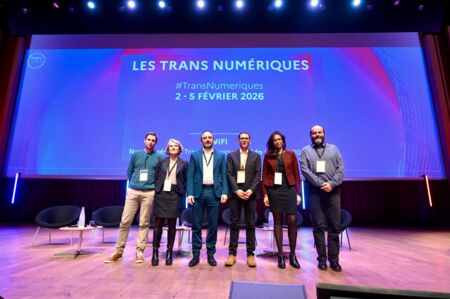
The PEPR AgroEcoNum’s participation in Trans Numériques 2026, held from February 2 to 5, 2026, in Rennes, provided an opportunity to interview the program’s scientists.
article

03 June 2026

By: AgroEcoNum

A look back at Trans Numériques 2026

From 2 to 5 February 2026, Rennes hosted the first edition of Trans Numériques, a scientific conference that brought together the communities of 13 research programmes supported by the France 2030 plan to explore the challenges of the digital continuum: performance, robustness, security, resource efficiency and societal impact. The event attracted over 1,000 participants.
article

24 April 2026

By: AgroEcoNum

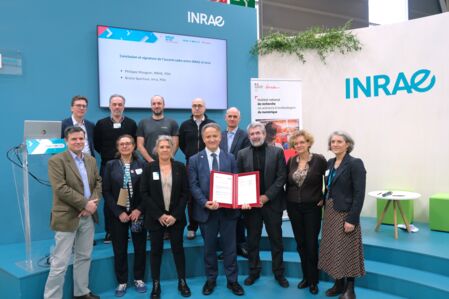
Five new projects have joined the AgroEcoNum programme!

Discover the successful applicants from the second and final call for proposals under the Agroecology and Digital Technology research programme. With the addition of five new projects, the programme now comprises 23 research and infrastructure projects, each funded for five years with a budget of between €1 million and €3 million. These projects serve to strengthen and complement the scientific themes supported by the programme and the associated expertise.
article

31 March 2026

By: AgroEcoNum

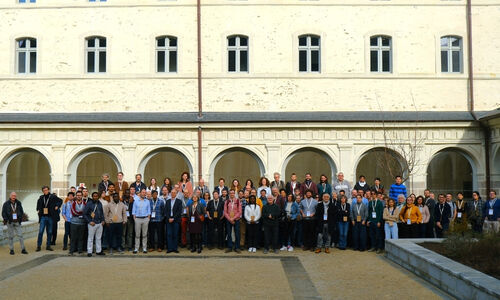
A look back at the PEPR AgroEcoNum Annual Conference 2026

On 6 February 2026, against the magnificent backdrop of the Couvent des Jacobins in Rennes, the annual conference of the PEPR Agroecology and Digital Technology brought together around a hundred people (research organisations, universities, schools, the National Research Agency, the Ministry of Agriculture, and socio-economic partners).
DSCF2588.JPG
article

27 February 2026

By: AgroEcoNum

The AgroEcoNum PEPR at the 2026 International Agricultural Show

On Thursday, 26 February 2026, during the International Agricultural Show, the PEPR Agroecology and Digital Technology programme took part in the meeting entitled ‘Artificial intelligence: what transformative potential for agriculture?’ at the INRAE stand.
article

16 January 2026

By: AgroEcoNum

WAIT4 annual meeting: assessing animal welfare in the face of agroecological transition challenges

On 8 January 2026 in Rennes, the scientific community of the WAIT4 project ‘Artificial intelligence and new technologies to assess relevant welfare indicators for animals facing the challenges of agroecological transition’ met for a day of rich discussion and sharing, marking three years of scientific progress since its launch.
article

01 April 2026

By: AgroEcoNum

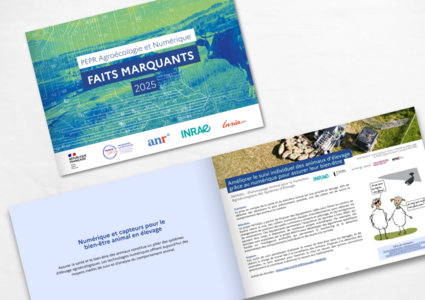
PEPR AgroEcoNum publishes its booklet of key scientific facts for 2025

Discover an initial overview of the scientific results from the first wave of funded projects.
article

02 December 2025

By: AgroEcoNum

5 misconceptions about research data

Research data management is now a major scientific, economic and societal issue. Failure to apply the FAIR principles (Findable, Accessible, Interoperable, Reusable) not only leads to considerable financial losses, but also to wasted time, poor exploitation of scientific results and a hindrance to reproducibility.
article

13 November 2025

By: AgroEcoNum

Plant genetic resources: the new version of the Florilège portal

France is home to a wide variety of plant resources that are valuable for research and plant breeding, preserved in Biological Resource Centers (BRCs). The Florilège portal is a key tool for facilitating access to these collections, bringing together data from all of these centers in a single entry point.
article

23 October 2025

By: AgroEcoNum

Launch of the BIODICAPT project

On October 9 and 10, participants in the Biodicapt project gathered for the operational launch of the large-scale, sensor-based biodiversity monitoring project, which supports ecosystem services for the assessment of agroecological systems.
article

20 October 2025

By: AgroEcoNum

New tools for measuring agroecological indicators in plants and animals

The PEPR Agroecology and Digital Technology program is funding several infrastructure projects to accelerate the agroecological transition. Among them, two flagship projects are exploring new ways of observing living organisms: PATASEL, dedicated to animals, and AgroEcoPhen, dedicated to plants. Their shared ambition is to identify new characteristics of interest to agroecology and contribute to the design of more sustainable agricultural systems.
  • 1 (current)