



A look back at Trans Numériques 2026

From 2 to 5 February 2026, Rennes hosted the first edition of Trans Numériques, a scientific conference that brought together the communities of 13 research programmes supported by the France 2030 plan to explore the challenges of the digital continuum: performance, robustness, security, resource efficiency and societal impact. The event attracted over 1,000 participants.

Today, digital technology is everywhere: healthcare, agriculture, risk management, and artificial intelligence. It no longer recognizes disciplinary boundaries, and the challenges of the digital continuum are widely shared, whether they involve systems, networks, or the cloud. Behind this groundbreaking event lies a single ambition: to build French digital sovereignty.

Initiated by the PEPR Cloud and led by Inria, the event brought together 13 research programs: AgroEcoNum (Agroecology and Digital Technologies), Cloud, eNSEMBLE (Digital Collaboration), Cybersecurity, EDT (Engineering Digital Twins), AI (Artificial Intelligence), ICCARE (Cultural and Creative Industries), MOBIDEC (Digitalization and Decarbonization of Mobility), NumEco (Eco-Responsible Digital Technology), NumPEx (Digital Technology for Exascale), Networks of the Future, Digital Health, and VDBI (Sustainable City).

On February 5, the Agroecology and Digital program featured several presentations illustrating the role of digital technology in agricultural transitions.

Conference “Digital Technology for Agricultural Transitions”

The February 5 conference, led by Carole Caranta (Deputy Director General for Science and Innovation, INRAE), set the stage by highlighting the central role of digital technology in agricultural transitions toward more sustainable, resilient, and high-performing models, in light of the competitiveness challenges facing the agricultural and food sectors, which must combine economic and environmental performance in the context of climate change.

Examples of concrete solutions leveraging digital technology at various stages of agricultural production and farm management were presented: genetics and plant and animal breeding, early detection and disease monitoring, animal welfare, resource management (soil, water), conservative use of inputs, yield monitoring and optimization, training tools for farmers, and automation and robotics that help reduce the physical strain of work.

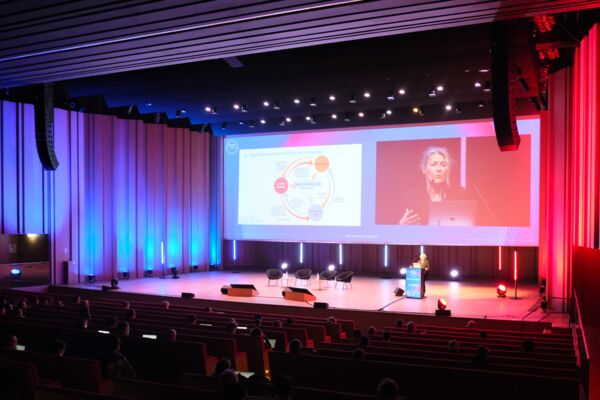
Trans Numériques 2026_Carole Caranta
Keynote address by Carole Caranta (Deputy Director General for Science and Innovation, INRAE) at Trans Numériques 2026. © INRAE / PEPR AgroEcoNum

Session: “Agricultural Equipment, Agroecology, and AI”

The session began with a presentation by Philippe Martinet (Research Director, Inria), who introduced the NINSAR project, which aims to design autonomous multi-robot systems operating at the plant level to implement cultivation practices based on agroecological principles such as crop rotation or “pixel farming”.

Florence Gondret (Research Director, INRAE) then highlighted the role of sensors, cameras, and artificial intelligence methods in assessing animal welfare, particularly within the framework of the WAIT4 project, in connection with the agroecological transition and adaptation to climate change. The goal is to measure relevant indicators of animal welfare and develop new agricultural equipment based on these indicators. The selected agricultural equipment will make it possible to assess the effectiveness of changes in practices within the context of the agroecological transition and to define alert thresholds regarding animals’ resilience to climate hazards.

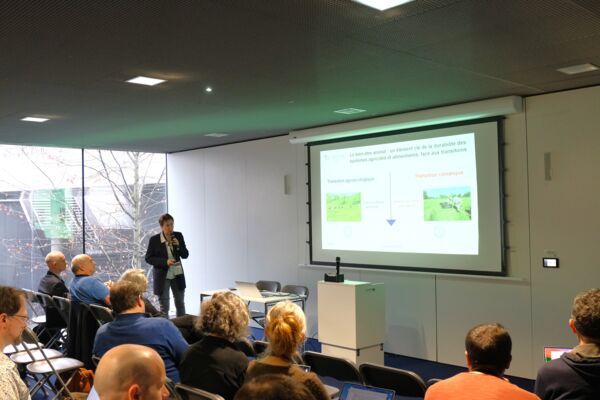
Trans Numériques 2026_Florence Gondret
Presentation by Florence Gondret (Research Director, INRAE) at Trans Numériques 2026. © INRAE / PEPR AgroEcoNum

Guillaume Bocquet (Director of Regulatory Affairs, AXEMA) rounded out these presentations by highlighting the potential of innovations in agricultural equipment to reduce the physical strain of work, limit risks, and support the agroecological transition, while also helping to improve productivity. He also highlighted several barriers to their deployment: the high cost of acquiring these technologies, the slow turnover of agricultural equipment, regulatory constraints, as well as the still-limited use of digital features and farmers’ insufficient awareness of their benefits. The lack of training also constitutes a significant obstacle, with all these factors weighing on the adoption and acceptance of these innovations.

Session “Data and Its Uses in Agroecology”

Finally, the session “Data and Its Uses in Agroecology” highlighted the strategic role of data for agroecology. Dino Ienco (Research Director, INRAE) presented the emerging concept of data-centric artificial intelligence, emphasizing the importance of data quality and reliability.

Bertrand Cloez (Research Director, INRAE) illustrated the contribution of digital technology to meadow and pasture management within the framework of the AI-HERBAGE project. Data from on-board sensors and satellite imagery offer significant opportunities to improve resource management, preserve biodiversity, and enhance animal welfare. However, utilizing this data poses scientific challenges, particularly regarding the development of algorithms tailored to these new data sources.

Stéphane Lemarié (Research Director, INRAE) provided insights from the social sciences, particularly within the framework of the CoEDiTAg project. The presentation addressed the conditions for adoption of digital tools by farmers and the economic challenges associated with organizing the supply of data and digital tools.

Futuristic workshop: “How can we imagine a possible and desirable future?” ”

The PEPR had proposed a foresight workshop for doctoral students. The workshop was designed and facilitated by Annie Gentes and her team (CYU, PEPR’s LINDDA project). The objective: to develop the ability to envision desirable futures, integrate digital cultures, and work across disciplines. The scenarios explored four major themes—biodiversity, water, health, and food—for which a systems approach is necessary to understand the trajectories and potential consequences of digital technology. About twenty doctoral students from the 13 PEPRs shared the results of their reflections during the closing plenary session of TransNumériques, in the presence of representatives from the SGPI.

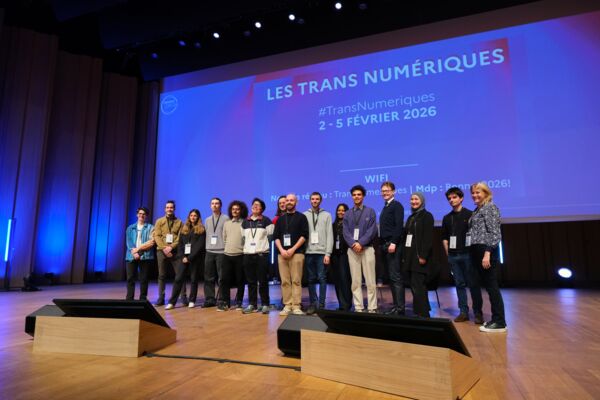
Trans Numériques 2026_Atelier prospective
Presentation of a future-oriented workshop by PEPR doctoral students during Trans Numériques 2026. © INRAE / PEPR AgroEcoNum

Available Resources